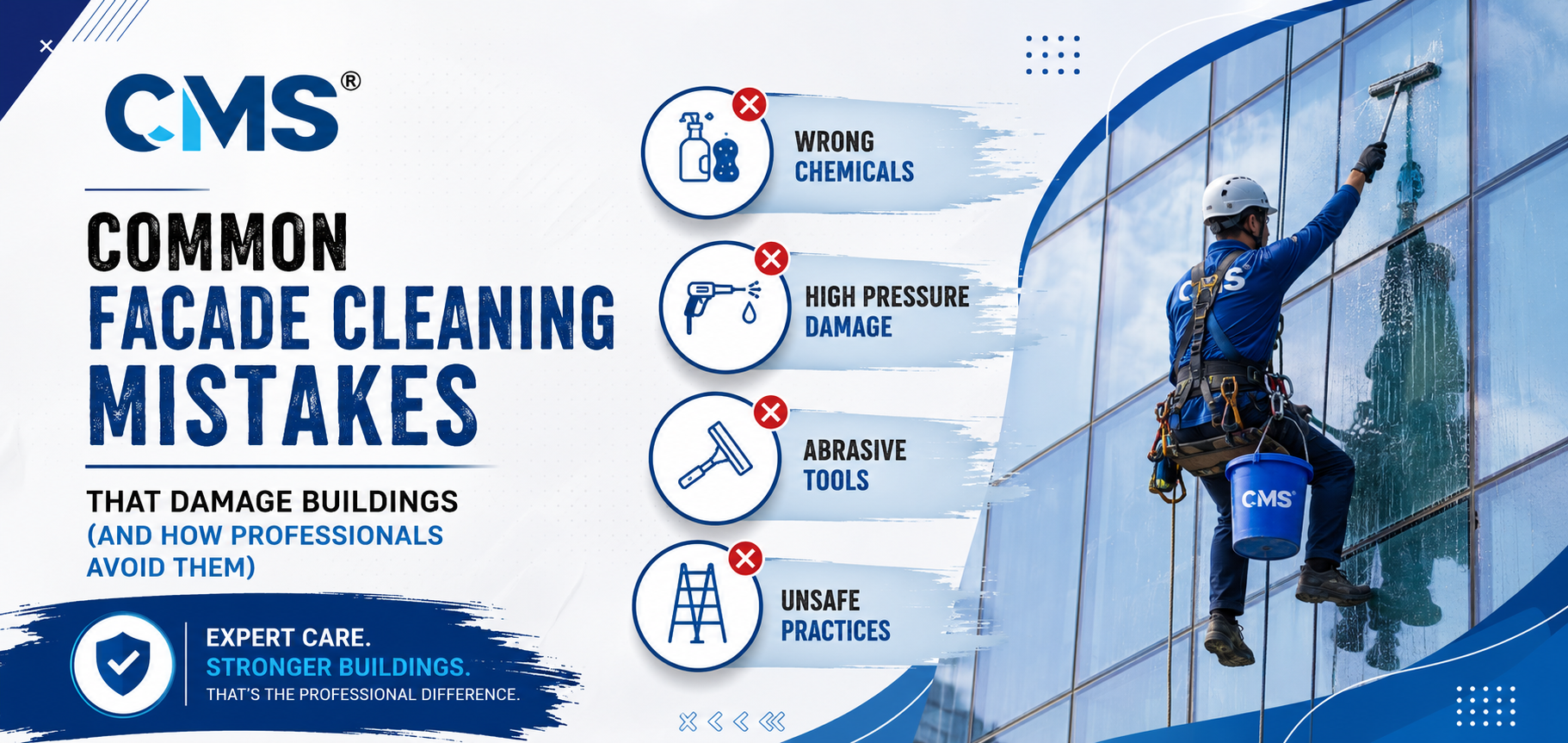
Common Facade Cleaning Mistakes That Damage Buildings (And How Professionals Avoid Them)
Facade cleaning services are something most building owners only think about once a problem is already staring back at them. Maybe it’s black streaks running down a glass tower. Maybe it’s chalky white residue on painted walls, or cement dust that never seems to wash off after construction. By the time most people search for help, the damage to their building’s appearance has already started — and sometimes the structure has been affected too.
Before getting into what goes wrong, it helps to understand what facade cleaning actually involves. We’ll also look at why buildings need it, and how a real-world cleaning mistake can spiral into an expensive repair job. Then we’ll cover how the right professional approach prevents that from happening.
What Is Facade Cleaning?
Facade cleaning is the process of removing dirt, dust, pollution residue, algae, and construction debris from a building’s exterior surfaces. This includes glass curtain walls, aluminum composite panels (ACP), natural stone, painted concrete, and metal cladding. Unlike a simple wash-down, professional facade cleaning is a surface-specific process. The cleaning method, water pressure, and chemical solution all change depending on the material being cleaned.
Facades face constant environmental stress. Vehicle emissions, monsoon moisture, construction dust, and UV exposure all take a toll over time. Together, these gradually build up grime, discoloration, and biological growth like algae or mold. Left untreated, this buildup doesn’t just look bad. It can trap moisture against the building, accelerate paint degradation, and corrode metal fittings over time.
This is exactly why facade cleaning services exist as a specialized trade, rather than a job for general housekeeping staff. The work combines surface science, safety-rigging expertise for high-rise access, and chemical knowledge. Getting any one of these wrong can cause real damage.
The Main Methods Used in Facade Cleaning
Professional facade cleaning isn’t a single technique. It’s a set of methods, chosen based on the surface and the type of staining involved:
- Soft washing — low-pressure water with a cleaning solution, used on glass, ACP, and painted surfaces
- Pressure washing — higher water pressure used on bare concrete, brick, and durable masonry
- Chemical cleaning — pH-balanced solutions used to break down algae or mineral staining without scrubbing
- Manual wiping and squeegee finishing — used on glass facades for a streak-free finish
- Biocide treatment — applied to areas with persistent algae or moss, especially on shaded walls
Knowing which method applies to which part of a building is the core skill here. It’s what separates trained facade cleaning teams from general cleaning labor.
A Real Problem: When a Quick Fix Turns Into an Expensive Mistake
Picture a mid-sized commercial complex in Noida, three years old. Its glass-and-ACP facade has started showing dull patches and black streaking near the drainage points. The building’s facility manager, trying to save costs, hires a local cleaning crew. The crew has pressure-washing equipment, but no facade-specific training.
They blast the entire elevation with the same high-pressure setting they’d use on a parking lot. Within weeks, the building owner notices several problems:
- Water seepage behind the ACP panels near the joints
- Faint white haze on the glass where the sealant was disturbed
- Peeling paint on the lower painted section of the building
- A sealant joint that now needs to be cut out and replaced
What was meant to be a routine cleaning job turns into a much larger repair bill. There’s also the inconvenience of scaffolding and downtime while the damage gets fixed.
This scenario plays out more often than most property owners realize. And it’s almost always caused by the same handful of avoidable mistakes.
The Solution: Why Professional Facade Cleaning Services Matter
The fix isn’t to avoid cleaning the facade. Neglecting it causes its own long-term damage through algae growth, paint degradation, and trapped grime. The real fix is choosing facade cleaning services that treat every surface differently. That means inspecting before cleaning, and using trained personnel instead of general labor with pressure-washing equipment.
This is the difference between a facade that stays streak-free and structurally sound for years, and one that needs repair work within months of a “cleaning.”
Why Noida Buildings Need More Frequent Facade Attention
Buildings in Noida face a specific combination of environmental pressures. These pressures speed up facade grime buildup compared to many other cities. Ongoing construction across sectors like Noida Extension, Sector 62, and the Expressway belt means airborne cement dust settles on exteriors year-round. Add in heavy winter pollution, followed by monsoon humidity that encourages algae growth on shaded walls. Most facades in the region show visible buildup well before the 12-month mark that might apply elsewhere.
This is one reason local facade cleaning services in Noida often recommend a shorter maintenance schedule than the general 6-12 month guideline. This is especially true for buildings facing major roads or sitting near active construction sites.
Why Facade Cleaning Mistakes Are So Common
Most facade damage isn’t caused by neglect. It’s caused by the wrong technique, often applied with good intentions. Buildings combine multiple materials on a single elevation, and each one reacts differently to water pressure, chemicals, and physical contact.
When cleaning crews treat every surface the same way, the consequences show up fast:
- Hairline scratches on glass and glazing
- Faded, chalky, or peeling exterior paint
- Corroded metal railings and window frames
- Weakened sealant joints that lead to water seepage
- Etched or stained natural stone and marble cladding
This is why commercial facade cleaning and building exterior maintenance are increasingly handled by trained specialists. The margin for error on a building’s exterior is much smaller than people assume.
Common Facade Cleaning Mistakes That Damage Buildings
Mistake 1: Using High-Pressure Washing Without Adjusting for Surface Type
One of the most frequent errors is using the same high-pressure water jet on every surface. Pressure washing works well on bare concrete and certain hardy stone. But it’s one of the worst things you can do to glass, ACP, or painted surfaces if the pressure isn’t reduced.
What typically goes wrong:
- Excessive PSI forces water behind ACP panels and glazing, leading to seepage and hidden mold
- High pressure strips the protective top coat off painted exteriors
- Aggressive jets erode soft stone, grout lines, and decorative plasterwork
- Pressure directed at window seals pushes water past the sealant barrier
How professionals avoid it: Trained facade cleaning teams calibrate water pressure by material. They typically use low-pressure or soft-washing methods on glass, ACP, and painted sections. Higher pressure is reserved only for concrete and durable masonry that can tolerate it.
Mistake 2: Mixing Incompatible Chemical Cleaners
Using the wrong cleaning agent is a common and damaging mistake. So is combining multiple chemicals without understanding how they interact. Harsh acidic or alkaline cleaners can discolor anodized aluminum, etch glass coatings, and corrode metal frames in a single application.
Common chemical mistakes include:
- Using acidic descalers on natural stone, causing permanent etching
- Applying undiluted bleach-based cleaners on painted or coated surfaces
- Combining ammonia-based and chlorine-based products, which produces harmful fumes
- Using generic “all-purpose” cleaners on anodized or powder-coated aluminum
How professionals avoid it: Professional facade cleaning services rely on surface-specific, pH-balanced solutions. These are tested for glass, stone, ACP, and painted exteriors. There’s no single all-purpose chemical applied across the whole building.
Mistake 3: Ignoring Material Differences Across the Same Elevation
Very few buildings are made of a single material. A typical commercial or residential facade in Noida might combine glass curtain walls, ACP cladding, painted concrete, and stone accents — sometimes all on the same wall. Treating this mixed surface as uniform is one of the most costly mistakes in the industry.
Why this matters:
- Glass needs streak-free, non-abrasive cleaning agents to avoid micro-scratching
- ACP panels require gentle cleaning to protect the factory-applied coating
- Painted surfaces need low-pressure methods to prevent peeling
- Stone and marble need pH-neutral solutions to avoid permanent etching
How professionals avoid it: Before starting, experienced building facade cleaning teams map out every material on the elevation. They assign a specific technique and product to each section, rather than running one process across the entire structure.
Mistake 4: Skipping a Pre-Cleaning Inspection
Jumping straight into cleaning without inspecting the facade first is a costly mistake. Existing cracks, loose panels, or weak anchor points can worsen once exposed to water pressure and chemicals.
A proper pre-cleaning inspection checks for:
- Cracked or loose cladding panels
- Deteriorated or missing sealant at joints
- Rust spots on metal frames or railings
- Existing water seepage marks or staining
- Weak anchor points before any rigging is set up
How professionals avoid it: Reputable facade maintenance companies conduct a structural walkthrough first. This happens before any water or chemical touches the building. Risk areas get flagged in advance, so the cleaning plan can be adjusted to avoid making existing problems worse.
Mistake 5: Using Untrained Labor for High-Rise Cleaning
Facade cleaning on multi-storey buildings involves rope access, suspended platforms, or cradle systems. This is where safety and cleaning quality both tend to break down when the crew isn’t properly trained. Untrained workers often rush the job, miss sections, or rig equipment incorrectly. That creates risk for the building and for the workers themselves.
Risks of using untrained labor:
- Inconsistent results, with visible streaks or missed patches
- Damage to window seals from improper rope or harness contact
- Safety hazards for workers and pedestrians below the work zone
- Voided insurance coverage in the event of an accident on-site
How professionals avoid it: Established high-rise facade cleaning providers deploy rope-access technicians trained to recognized safety standards, such as those set by IRATA, the Industrial Rope Access Trade Association. Site supervisors also inspect rigging points and anchor strength before every session begins.
Mistake 6: Not Checking Sealants and Joints Before Cleaning
Window sealants and expansion joints are often the most neglected part of facade maintenance. Cleaning directly over a deteriorated sealant, without addressing it first, can force water into the joint. The leakage that follows may not show up for weeks.
How professionals avoid it: A thorough facade cleaning process checks sealant condition as a standard step. Joints that need resealing get flagged, rather than cleaned over and left to worsen out of sight.
How Professional Facade Cleaning Services Get It Right
Professional teams avoid the mistakes above by following a structured, surface-aware process from start to finish. This approach is built on years of hands-on experience across different building types.
Soft Washing for Sensitive Surfaces
Low-pressure soft washing removes dirt, algae, and grime without stripping coatings. It also avoids forcing water into joints. This makes it the preferred method for glass, ACP, and painted facades, where high pressure would otherwise cause damage.
Surface-Specific Cleaning Agents
Instead of one universal chemical, experienced teams match the cleaning agent to the material. They use pH-neutral solutions for stone, non-abrasive cleaners for glazing, and gentle degreasers for ACP panels. This matching comes from years of testing what works safely on each surface type.
Trained and Certified Cleaning Crews
Certified technicians use proper rope-access or scaffolding systems. They follow documented safety checklists and know how to recognize when a surface needs a different approach mid-job, rather than sticking to one method regardless of the material.
Pre- and Post-Cleaning Inspections
A walkthrough before cleaning identifies risk areas in advance. A post-cleaning inspection then confirms no new damage occurred. It also checks that the facade has been left streak-free, intact, and properly resealed where needed.
Signs Your Building Needs Professional Facade Cleaning
If you’re unsure whether it’s time to book exterior building cleaning, watch for these signs:
- Visible dust layers or grime buildup on glass and panels
- Black streaks or algae growth near drainage points and overhangs
- Faded, chalky, or discolored paint on the exterior
- Cement and dust residue left behind after nearby construction work
- Water staining or discoloration around window frames and joints
- A noticeable difference in appearance compared to neighboring buildings
Facade Cleaning Services in Noida by Classic Maintenance Services
Classic Maintenance Services provides professional facade cleaning services in Noida. The team works with commercial complexes, residential towers, and post-construction properties across the region. Rather than applying one cleaning method to an entire building, they start by identifying every material on the facade. That could be glass, ACP, stone, or painted concrete. Each section then gets the right technique and solution.
Their facade cleaning process typically includes:
- A pre-cleaning inspection to flag cracks, loose panels, or sealant issues before work begins
- Soft washing for glass, ACP, and painted surfaces to avoid pressure-related damage
- pH-balanced, surface-specific cleaning agents instead of generic chemical mixes
- Trained crews equipped for safe high-rise access on multi-storey buildings
- A post-cleaning inspection to confirm the facade is streak-free and undamaged
Classic Maintenance Services also handles post-construction cleaning for newly built properties in Noida. This covers cement dust, paint splatter, and adhesive residue, removed carefully so fresh paintwork and new glazing aren’t damaged. Whether it’s a one-time deep clean after handover or a recurring commercial facade cleaning schedule, the approach stays the same: assess the surface first, then clean.
For property owners and facility managers in Noida, finding the right facade maintenance company matters. A team that understands the materials they’re cleaning won’t cut corners on technique or safety. That’s the difference between a building that looks good for a season and one that stays protected for years.
How to Choose the Right Facade Cleaning Company
Not every cleaning provider that advertises facade services actually has the training and equipment to do it safely. Before hiring a team, it’s worth checking a few specific things:
- Ask how they handle mixed materials. A provider that gives the same answer for glass, ACP, and stone hasn’t assessed your building properly.
- Check their rigging and safety setup. For buildings above two or three storeys, ask if technicians are trained in rope access or use certified scaffolding — not improvised ladders.
- Ask about their cleaning agents. A credible provider should explain why they’re using a specific solution on a specific surface.
- Request a pre-cleaning inspection. Providers who skip straight to a price quote are more likely to miss existing damage.
- Look for post-construction experience. If your building is newly handed over, ask about their experience with cement residue and paint splatter removal specifically.
- Ask for references from similar buildings. A provider with genuine experience should be able to point to comparable projects they’ve handled.
These questions help separate an experienced facade maintenance company from a general cleaning service that has simply added “facade cleaning” to its list.
Frequently Asked Questions
How often should a building’s facade be cleaned? Most commercial and residential buildings benefit from professional facade cleaning every 6 to 12 months. Buildings near construction zones, busy roads, or high-pollution areas typically need more frequent attention.
Is pressure washing safe for all building exteriors? No. Pressure washing is generally safe for bare concrete and hardy masonry. But it can damage glass, ACP panels, and painted surfaces if the pressure isn’t reduced. Soft washing is the safer alternative for these materials.
Can DIY facade cleaning damage my building? Yes. Without the right equipment and surface-specific knowledge, DIY or general-labor cleaning often results in scratched glass, faded paint, or sealant damage. This is why professional facade cleaning services are a safer long-term choice.
What’s the difference between facade cleaning and post-construction cleaning? Facade cleaning is typically routine maintenance for an existing building’s exterior. Post-construction cleaning addresses the heavier cement dust, paint splatter, and debris left behind right after a building project finishes. Both need surface-aware techniques, but post-construction cleaning often needs a more intensive first pass.
How do I know if my building’s facade has hidden damage? Signs like water staining near windows or peeling paint in patches often point to underlying issues. A professional pre-cleaning inspection is the most reliable way to catch these problems early.
Does facade cleaning help with energy efficiency? Indirectly, yes. A clean glass facade lets more natural light through, which can reduce the need for artificial lighting during the day. Removing grime from ACP and metal surfaces also prevents extra heat absorption, which can add to a building’s cooling load.
How long does a typical facade cleaning project take? This depends on the building’s height and facade area. A mid-sized commercial building in Noida typically takes one to four days for a full exterior clean, including inspection and rigging setup. Post-construction cleaning projects often take longer due to the heavier residue involved.
Final Thoughts
Facade cleaning isn’t just about appearance. Done incorrectly, it can compromise a building’s sealants, coatings, and long-term structural health. The mistakes covered in this guide are common, but every one of them is avoidable with the right knowledge, equipment, and trained personnel.
If you’re looking for facade cleaning services in Noida that protect your building’s long-term condition, choose a team that treats every surface differently — not one that treats every surface the same way.