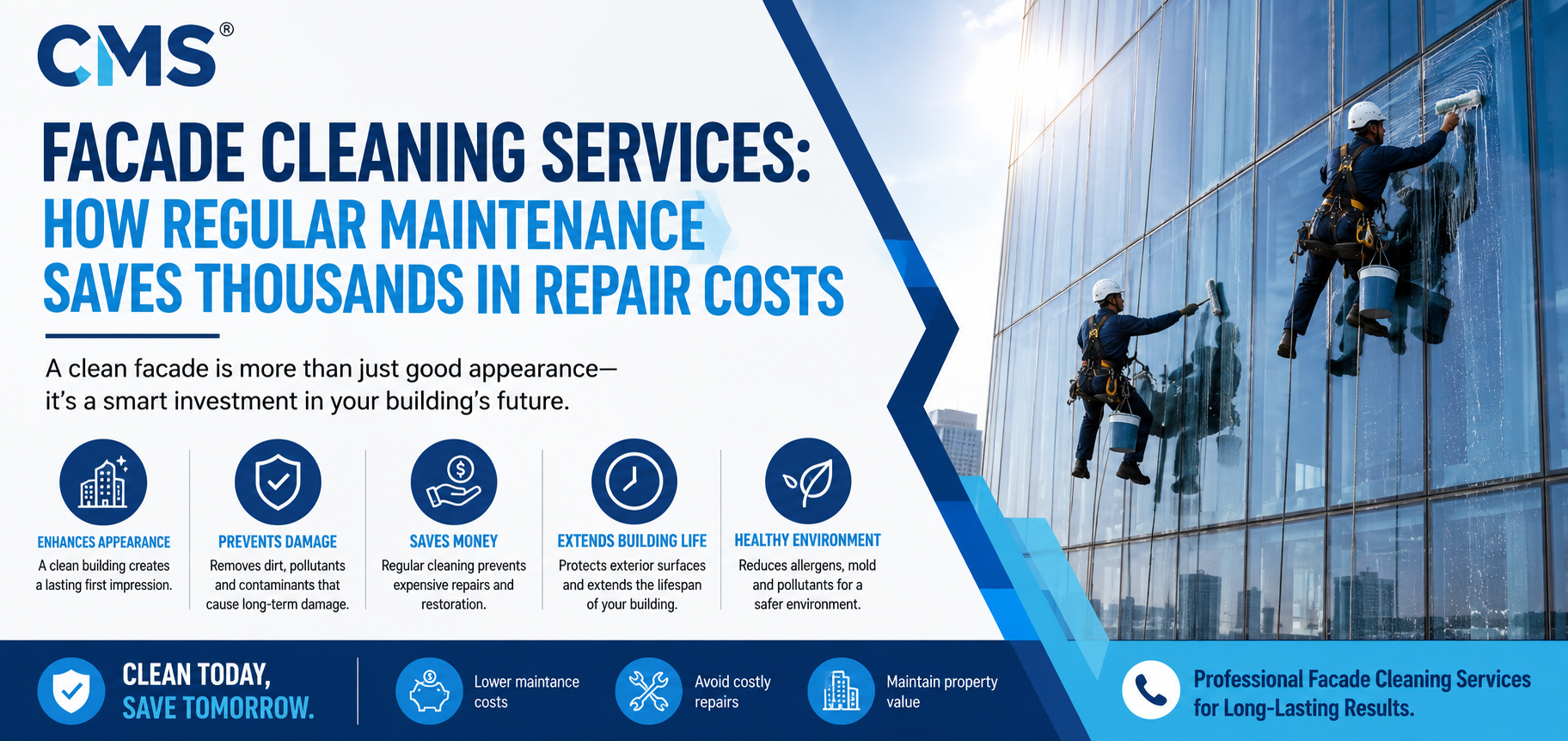
A building’s facade is the first thing anyone notices, and it’s also one of the most neglected parts of property maintenance. Regular facade cleaning services do more than improve appearance — they remove the dust, soot, and pollutants that slowly corrode glass, steel, and concrete surfaces, preventing damage that would otherwise cost far more to repair later. For property owners in Delhi NCR, Noida, and Gurugram, where pollution and weather extremes take a heavy toll on exteriors, understanding how professional cleaning protects a building’s value is essential before those small problems turn into expensive ones.
Why Facade Cleaning Services Matter More Than Ever
A building’s exterior is constantly exposed to dust, vehicle emissions, industrial soot, and moisture, all of which settle into the surface over time. In cities with heavy construction activity and traffic, this buildup happens faster than most owners expect, especially on glass and concrete surfaces facing busy roads.
Beyond appearance, a dirty facade signals poor upkeep to visitors, tenants, and potential buyers, which can affect everything from footfall in a retail unit to resale value of a commercial property. Pollutants aren’t just cosmetic either; acidic residues and grime trap moisture against the surface, accelerating corrosion in steel elements and weakening sealants around glass panels. Routine, professional cleaning interrupts this cycle before it becomes structural, and it also protects whatever finish or coating was applied when the building was constructed, extending the useful life of that original investment.
Modern Tools and Equipment Changing the Industry
Equipment has advanced significantly beyond basic hoses and ladders, and this shift is changing what property owners can expect from a cleaning schedule. Battery-powered water-fed poles now let technicians reach several storeys without scaffolding, using purified water that dries without leaving streaks or mineral spots on glass.
Drones fitted with cameras are also being used for pre-cleaning inspections on very tall buildings, helping teams spot damaged sealant, cracked panels, or heavy soiling before committing crew and equipment to a specific section. This reduces wasted time on the day of cleaning and helps providers quote more accurately, since the inspection identifies problem areas in advance rather than during the job itself. For property managers overseeing multiple buildings, this kind of upfront assessment also makes it easier to plan budgets across a full portfolio.
Facade Cleaning for Malls, Offices, and Residential Complexes
Different building types come with different cleaning priorities, even when the underlying methods overlap. Malls and retail spaces often prioritise glass clarity and a spotless entrance, since first impressions directly affect footfall and customer perception.
Office towers, particularly those with large glazed sections, focus more on consistent scheduling to maintain a professional appearance for tenants and visiting clients. Residential complexes tend to weigh cost against necessity more carefully, often scheduling cleaning annually rather than every few months, and prioritising sections most visible from the street or main entrance. Recognising these differences helps a provider tailor both the process and the pricing structure to what actually matters for each building type, rather than applying a one-size-fits-all package.
The Real Cost of a Neglected Facade
Skipping facade maintenance rarely saves money in the long run. What starts as a dull, stained surface often develops into cracked sealants, corroded metal fixtures, or water infiltration behind cladding — all of which are far more expensive to fix than routine cleaning.
Common consequences of a neglected facade:
- Corrosion of steel fixtures and window frames from trapped moisture and pollutants
- Cracked or degraded sealants that allow water to seep behind cladding panels
- Permanent staining on concrete and stone that cleaning alone can no longer remove
- Mould and moss growth in shaded or damp sections of the building
- Reduced property value and tenant interest due to poor curb appeal
A facade repair or re-cladding project can run into lakhs of rupees, while scheduled cleaning and inspection typically costs a fraction of that, making it one of the more cost-effective forms of preventive building maintenance.
Water-Based Facade Cleaning Methods
Water-based cleaning is the least invasive of the two main facade cleaning approaches and is typically the first method considered for regular maintenance. It relies on washing, soaking, or pressure-washing to lift dirt and grime without altering the building material.
Common water-based techniques:
- Washing — manual or low-pressure cleaning for delicate or older surfaces
- Soaking — used on heavily soiled areas before a final rinse
- Pressure-washing with hot water or steam — the most widely used method, typically applying pressurized water between 100 and 400 psi
Pressure-washing is particularly effective on facades with heavy dirt accumulation, such as those facing busy roads or construction zones. Because it doesn’t involve harsh chemicals, it’s often the preferred first step before chemical treatment is considered. Providers often test pressure on a small, less visible section first to confirm the surface can handle it.
Chemical Cleaning Methods for Tougher Stains
Some stains — old paint, rust marks, biological growth, or industrial residue — don’t respond to water alone. Chemical cleaning uses targeted agents to break down these substances without damaging the underlying material.
Depending on the stain and the facade material, professionals may use acidic cleaners, alkaline cleaners, organic solvents, or non-sudsing detergents. The choice matters: an acidic cleaner suited to concrete could damage certain metal or glass finishes, so a careful provider will test and select agents based on both the stain type and the surface material before applying anything at scale.
This selective approach protects the facade’s finish while still achieving a thorough clean, which is why chemical cleaning is generally reserved for problem areas rather than used as a blanket treatment across the entire building.
Rope Access and High-Rise Cleaning Techniques
Height is one of the biggest challenges in facade cleaning, especially for the tall commercial towers now common across Delhi NCR, Noida, and Gurugram. Reaching upper floors safely requires specialised equipment and trained personnel, not just longer hoses.
Access methods used by professional teams:
- Elevated work platforms for mid-rise buildings with accessible surrounding space
- Rope access techniques for high-rises where platforms aren’t practical
- High wall creepers for large, flat vertical surfaces
- Telescopic cleaning instruments for reaching upper sections from the ground
Even buildings with limited or no direct access to certain facade sections can usually be cleaned safely using a combination of these methods, which is why experience with varied building designs matters when choosing a provider. Architecturally complex buildings, with recessed balconies or angled glass sections, often need more than one access method used together to reach every surface properly.
Facade Cleaning for Glass, Steel, and Concrete Buildings
Different materials demand different care, and using the wrong method can cause lasting damage. Glass facades need streak-free techniques and squeegee-based finishing to avoid water spots, while steel elements require corrosion-safe cleaners that won’t strip protective coatings.
Concrete and stone surfaces, by contrast, are more porous and can absorb both dirt and cleaning agents if not handled correctly, sometimes requiring gentler, longer soaking methods rather than aggressive pressure-washing. A provider with experience across material types will adjust pressure levels, chemical choice, and technique for each section of a mixed-material building rather than applying one process to the entire structure — a distinction that often separates a truly clean finish from a patchy one.
Facade Restoration vs Facade Cleaning: What’s the Difference
These terms are often used interchangeably, but they describe different levels of intervention. Cleaning removes surface dirt without altering the material. Restoration goes further, addressing existing damage — repairing cracks, re-sealing joints, or restoring a glass surface’s clarity.
| Service | Purpose | When It’s Needed |
|---|---|---|
| Cleaning | Remove dirt, soot, pollutants | Routine, every 6–12 months |
| Restoration | Repair existing damage | Visible cracks, staining, or wear |
| Glass improvement | Restore clarity and finish | Cloudy, scratched, or dulled glass |
| Semi-permanent protection | Chemical coating for lasting cleanliness | After a full clean |
| Leak testing | Identify hidden water infiltration | Suspected leaks or after heavy rain |
| Waterproofing | Prevent moisture penetration | New construction or after leak repair |
Knowing which service applies helps avoid paying for restoration when scheduled cleaning would have prevented the issue.
Waterproofing and Water Leak Testing as Preventive Maintenance
Water infiltration is one of the most damaging, and least visible, problems a facade can develop. Small cracks or degraded sealants allow moisture behind cladding panels, where it can corrode structural elements or cause damp patches inside the building long before any exterior sign appears.
Water leak testing identifies these weak points before they cause visible damage, using controlled water application to simulate rainfall and pinpoint where a facade is failing. Waterproofing treatments then seal these vulnerabilities, extending the life of both the cleaning work and the underlying structure. Pairing regular cleaning with periodic leak testing catches problems while they’re still inexpensive to fix, rather than after water damage has already spread inside the building. This is especially relevant for basement-adjacent walls and terrace parapets, where leaks often go unnoticed until interior damage appears.
How Often Should Facade Cleaning Be Done?
Cleaning frequency depends on the building’s location, material, and exposure to pollution, but most commercial properties in the region follow a fairly consistent schedule.
| Building Type | Recommended Frequency | Key Consideration |
|---|---|---|
| High-rise office towers | Every 6 months | Heavy pollution exposure, glass upkeep |
| Malls and retail buildings | Every 6–9 months | Curb appeal directly affects footfall |
| Residential apartment complexes | Annually | Lower traffic exposure, cost-conscious scheduling |
| Buildings near construction zones | Every 3–4 months | Faster dust and debris accumulation |
| Heritage or stone facades | Case-by-case | Requires gentler, specialised methods |
Buildings closer to major roads or ongoing construction typically need more frequent attention, since dust and grime accumulate noticeably faster in those conditions.
Facade Cleaning Costs vs Repair and Replacement Costs
The financial case for regular maintenance becomes clear when cleaning costs are compared against what repair or replacement work typically involves.
- Routine cleaning is charged per square foot and scales with building size and access difficulty
- Facade restoration, including crack repair and re-sealing, costs significantly more due to material and labour
- Re-cladding or full facade replacement is the most expensive option, often required only when neglect has gone unaddressed for years
- Preventive waterproofing costs a fraction of repairing water damage to interior structures and finishes
Viewed over a five-to-ten-year period, consistent cleaning and inspection almost always works out cheaper than reactive repairs, particularly for buildings with glass or steel elements that corrode quickly once damaged.
Facade Cleaning Trends in Delhi NCR, Noida, and Gurugram
Delhi NCR, Noida, and Gurugram are among the fastest-growing urban centres in the country, with skyscrapers and commercial towers going up rapidly. This growth has increased demand for specialised, high-rise-capable facade cleaning services that can safely handle taller and more architecturally complex buildings.
Property managers in this region are also increasingly requesting semi-permanent protective coatings after cleaning, which slow down re-soiling and extend the interval between full cleaning cycles. Given the region’s dust levels and seasonal pollution spikes, more commercial properties are now scheduling cleaning around specific pollution events rather than relying purely on a fixed annual calendar, a more responsive approach than was common just a few years ago.
Safety Standards in Professional Facade Cleaning
High-rise cleaning work carries real risk, both to the cleaning crew and to the building itself, which is why safety protocols matter as much as the cleaning technique.
What to look for in a safety-conscious provider:
- Certified, professionally trained service personnel for rope access and elevated platform work
- Proper harnessing, anchoring, and fall-protection equipment for all height-based work
- Protective measures for windows, ledges, and fixtures to prevent accidental damage during cleaning
- Compliance with local safety regulations for working at height in commercial buildings
A provider that prioritises safety standards typically also carries the right insurance and training documentation, which is worth asking about directly before signing a contract for high-rise work. It’s reasonable to request proof of recent safety audits or accident-free records, particularly for buildings taller than five or six storeys where the margin for error is smaller.
How to Choose the Right Facade Cleaning Company
With more providers entering the market as construction activity grows, the right choice depends on more than just price.
- Experience with your facade material — glass, steel, and concrete all need different handling
- Access equipment available — rope access, elevated platforms, or high wall creepers for taller buildings
- Transparent, itemised quotes — separate pricing for cleaning, restoration, and add-ons like waterproofing
- Safety certifications — proof of trained personnel and proper equipment for height-based work
- Portfolio of similar buildings — experience with comparable height, material, and location
A dependable provider of facade cleaning services should be able to walk through their process clearly, from initial inspection to the specific cleaning method chosen for each section of the building.
Seasonal Facade Maintenance Tips for Delhi NCR
Weather patterns in Delhi NCR create distinct seasonal challenges for building exteriors. Monsoon season increases the risk of water infiltration through weakened sealants, making pre-monsoon leak testing and waterproofing checks especially valuable.
Summer brings dust storms and construction-related grime that settle quickly onto glass and concrete surfaces, often requiring a cleaning cycle before the season’s heaviest pollution period. Winter’s cooler, less humid conditions make it a practical window for restoration work like sealant replacement or glass facade improvement, since drying and curing times for coatings are more predictable than during monsoon months.
Frequently Asked Questions
1. How often should commercial buildings schedule facade cleaning?
Most commercial buildings in the NCR region benefit from professional facade cleaning services every 6 to 9 months, though buildings near construction zones may need it more frequently.
2. What’s the difference between water-based and chemical facade cleaning?
Water-based cleaning uses washing, soaking, or pressure-washing for general dirt removal, while chemical cleaning targets specific stains like rust or biological growth using selected chemical agents.
3. Is pressure-washing safe for all facade materials?
Not always. Pressure-washing works well for concrete and steel facades with heavy dirt, but delicate glass or older stone surfaces may need gentler methods to avoid damage.
4. How much does facade cleaning typically cost compared to repairs?
Routine cleaning is priced per square foot and is significantly cheaper than facade restoration or re-cladding, which involve material and structural repair costs.
5. Can facade cleaning prevent water leaks?
Cleaning alone doesn’t fix leaks, but combining it with water leak testing helps identify weak points early, before they develop into costly water damage.
6. What is rope access cleaning, and when is it used?
Rope access is a technique using trained personnel on ropes and harnesses to clean high-rise buildings where platforms or scaffolding aren’t practical.
7. Do glass facades need different cleaning than concrete facades?
Yes, glass requires streak-free, squeegee-based techniques, while concrete is more porous and often needs different pressure levels and cleaning agents.
8. How long does a typical facade cleaning project take?
Timelines vary by building height and size, ranging from a single day for smaller buildings to several days for large commercial towers.
9. What causes facades to deteriorate faster in Delhi NCR?
High pollution levels, construction dust, and seasonal weather extremes accelerate soiling and material wear compared to less polluted regions.
10. Is waterproofing necessary after every facade cleaning?
Not always, but it’s recommended after restoration work or in buildings with a history of water infiltration, to protect the surface longer-term.
11. How do I know if my building needs restoration instead of just cleaning?
Visible cracks, persistent staining that cleaning doesn’t remove, or signs of water damage usually indicate restoration is needed rather than routine cleaning.
12. What safety measures should a facade cleaning company follow?
Look for certified personnel, proper fall-protection equipment, and compliance with local working-at-height regulations before hiring a provider.
13. Can facade cleaning improve a building’s resale or rental value?
Yes, a well-maintained facade improves curb appeal and signals good upkeep, which can positively influence both tenant interest and property valuation.