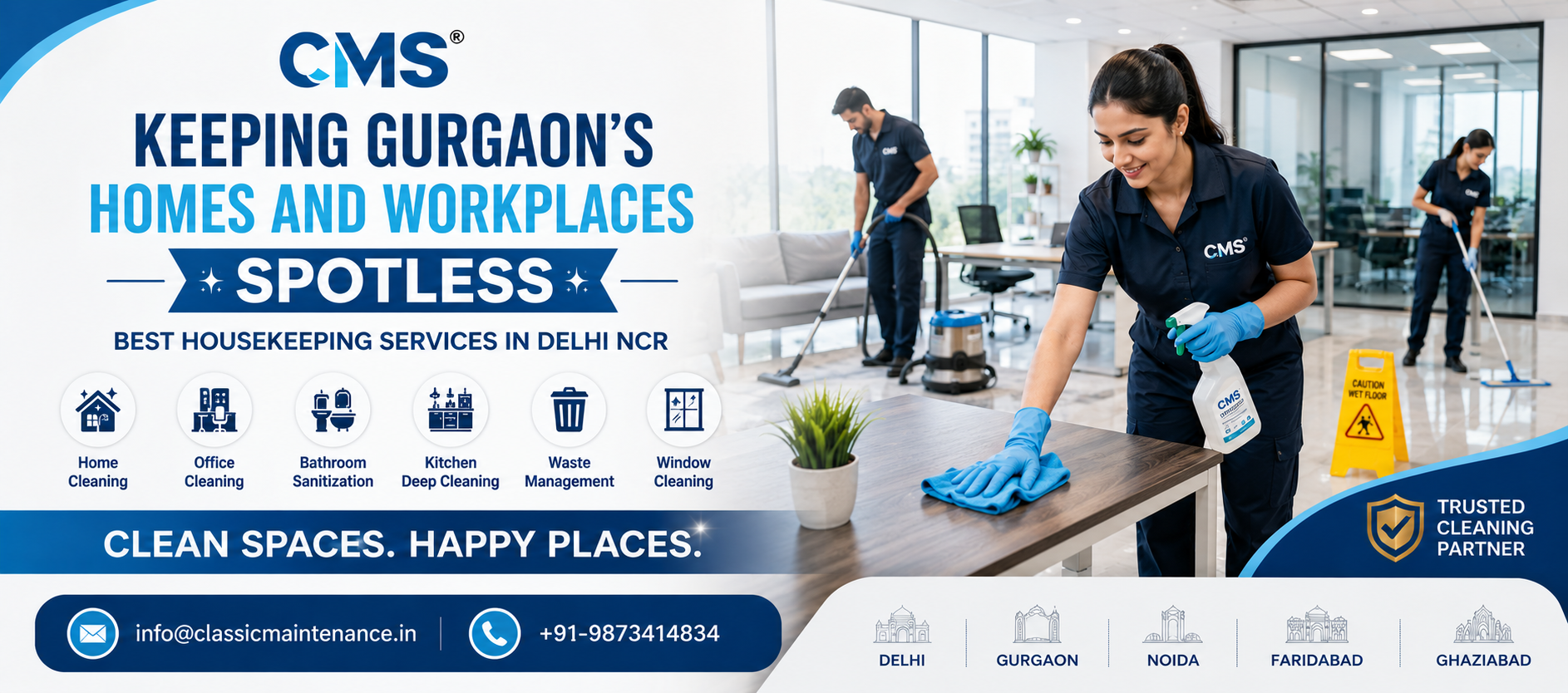
Delhi NCR has grown into one of India’s largest and busiest urban regions, spanning corporate towers, tech parks, malls, hospitals, and countless residential complexes across Delhi, Gurgaon, Noida, Faridabad, and Ghaziabad. With that scale of growth comes a constant need for cleanliness and hygiene management. This is exactly why so many homeowners, facility managers, and business owners now search for the best housekeeping services in Delhi NCR rather than trying to manage cleaning in-house. This guide covers everything you need to know — what these services include, why they matter, how they work across different industries, and how to choose the right provider.
What Housekeeping Services Really Mean
Housekeeping is often mistaken for basic cleaning, but professional housekeeping is a far more structured discipline. It combines scheduled cleaning routines, sanitation protocols, waste handling, and facility upkeep — all carried out by trained personnel using the right tools and materials. Rather than a one-off task, it functions as an ongoing system designed to maintain a property’s condition day after day.
A housekeeping program typically covers floors, washrooms, workstations, common areas, glass surfaces, and waste disposal points. In larger facilities, it may extend to pest control coordination, upholstery care, and support services like restocking supplies or managing storerooms. The exact scope depends on the type of property and the agreement with the service provider.
For residential clients, housekeeping might mean a small team visiting a few times a week to manage floors, kitchens, and bathrooms. For a corporate office or mall, it usually means a dedicated on-site team working in shifts to keep the property presentable throughout business hours.
Why Professional Housekeeping Has Become Essential
A Reflection of Standards The condition of a space says a lot about the people who manage it. A tidy reception area, streak-free glass, and odor-free washrooms tell visitors that a business pays attention to detail. The same applies to homes — a clean, organized living space makes daily life more comfortable and welcoming for family and guests alike.
Health and Hygiene Protection Dust, allergens, and bacteria accumulate quickly in high-traffic spaces. Left unmanaged, they contribute to poor indoor air quality and a higher risk of illness. Routine sanitization — particularly in washrooms, kitchens, and shared surfaces — significantly reduces this risk and supports better health outcomes for everyone using the space.
Productivity and Comfort Employees tend to work better in clean, organized environments. Cluttered desks, dusty air vents, or unpleasant washrooms are small but real distractions that add up over a workday. A well-maintained office supports focus, reduces sick leave, and contributes to a more positive workplace culture.
Safety Considerations Spills, loose debris, and cluttered walkways are common causes of minor accidents. Systematic housekeeping removes these hazards proactively, rather than waiting for someone to notice and report them. This is especially important in industrial or high-footfall commercial spaces where the risk of slips and falls is higher.
Property Value and Longevity Floors, fixtures, and furnishings degrade faster when neglected. Regular maintenance — proper mopping techniques, correct cleaning agents, and timely stain removal — helps preserve the condition of flooring, carpets, and fittings, extending their usable life and reducing replacement costs over time.
Core Components of a Housekeeping Program
Floor Care — Floors receive the most foot traffic and require consistent attention. This includes sweeping, mopping, scrubbing, and periodic polishing or buffing depending on the flooring material — marble, tile, wood, or vinyl each require slightly different handling.
Washroom Maintenance — Washrooms are one of the most scrutinized areas in any facility. Professional housekeeping covers fixture cleaning, sanitization, odor control, and restocking of consumables like soap, tissue, and hand sanitizer.
Dusting and Surface Cleaning — Workstations, furniture, shelves, and equipment need regular dusting and wiping to prevent buildup. This is usually a daily task in offices and a scheduled task in homes.
Glass and Facade Cleaning — Clean glass surfaces — windows, partitions, and building facades — significantly affect how a property looks from both inside and outside. This task often requires specialized tools, particularly for high-rise buildings.
Waste Management — Proper waste segregation, timely collection, and disposal are essential, not just for cleanliness but for regulatory compliance in many commercial settings. Some providers also coordinate recycling programs as part of their service.
Carpet and Upholstery Care — Carpets and upholstered furniture trap dust and allergens more than hard surfaces. Periodic deep cleaning — often using extraction machines — keeps them looking fresh and reduces allergen buildup.
Sanitization and Disinfection — High-touch surfaces like door handles, elevator buttons, and shared equipment need regular disinfection, particularly in offices, healthcare facilities, and public spaces.
Types of Housekeeping Services Available
- Residential Housekeeping — Scheduled visits to manage daily or weekly cleaning tasks: floor cleaning, kitchen upkeep, bathroom sanitization, and dusting. Common among working professionals and families with limited time.
- Commercial Housekeeping — Offices, co-working spaces, and business parks need ongoing housekeeping structured around shift-based staffing to match business hours.
- Industrial Housekeeping — Warehouses and manufacturing units require dust control, machinery area cleaning, debris removal, and safety-focused protocols aligned with operations.
- Institutional Housekeeping — Schools, colleges, and government buildings need cleaning schedules that work around class timings, exam periods, and public footfall.
- Healthcare Housekeeping — Hospitals and clinics demand strict hygiene standards, specialized sanitization protocols, and adherence to infection-control guidelines.
- Hospitality Housekeeping — Hotels and guest houses depend on housekeeping quality for guest experience — room cleaning, linen management, and public area upkeep.
Industries That Depend on Housekeeping Across the Region
Corporate and IT Offices From Connaught Place to Cyber City and Noida’s tech corridors, Delhi NCR’s business districts house thousands of corporate offices that rely on daily housekeeping to maintain professional environments for employees and visiting clients. Multinational companies often set strict facility standards, requiring vendors who can maintain consistent quality across large floor plates, multiple shifts, and sometimes round-the-clock operations for 24/7 functions like BPOs and support centers.
Residential Communities High-rise apartment complexes and gated communities need consistent upkeep of lobbies, corridors, elevators, and common amenities, alongside individual housekeeping for residents. Resident welfare associations (RWAs) often engage a single vendor for common areas while residents separately arrange in-unit cleaning — coordination between the two is worth clarifying upfront.
Retail and Shopping Malls With heavy footfall throughout the day, malls and retail stores require continuous floor cleaning, washroom maintenance, and glass upkeep. Peak hours, weekends, and festive seasons typically demand additional staffing to handle higher visitor volumes and the mess that comes with food courts and entertainment zones.
Healthcare Facilities Hospitals and diagnostic centers depend on specialized teams trained in infection control and medical-grade sanitization, including color-coded equipment to avoid cross-contamination, careful handling of biomedical waste with authorized disposal partners, and documented cleaning schedules for compliance.
Educational Institutions Schools and coaching centers benefit from regular cleaning planned around school hours, with heavier tasks like floor scrubbing and washroom deep cleaning scheduled after students leave.
Hospitality Venues Hotels, banquet halls, and service apartments rely on housekeeping quality as a direct driver of guest satisfaction, extending beyond basic cleaning to linen changes, room turnover speed, and consistent presentation standards.
Industrial and Logistics Hubs With NCR’s growing logistics and warehousing sector, industrial housekeeping supports safety compliance and operational efficiency, often coordinating cleaning schedules around shift changes and production timelines.
Co-Working and Shared Office Spaces NCR’s co-working sector brings a unique challenge — multiple businesses sharing common areas, meeting rooms, and pantries with round-the-clock access. Providers here typically work in shorter, more frequent cycles rather than a single end-of-day clean.
Housekeeping Needs Across Delhi NCR’s Key Localities
Delhi NCR isn’t a single, uniform market — different pockets of the region have distinct housekeeping needs based on the property types concentrated there.
- Cyber City, Golf Course Road, and Connaught Place — Dominated by corporate towers and premium office spaces, demand centers on daily maintenance of reception lobbies, conference rooms, cafeterias, and washrooms across multiple floors.
- DLF Phases, Sushant Lok, and South Delhi — Residential belts packed with apartments, villas, and gated communities, combining individual home cleaning with common-area upkeep.
- Sector 29, MG Road, and Connaught Place Markets — Known for restaurants, retail outlets, and entertainment venues, requiring experience in high-footfall commercial spaces.
- Noida and Greater Noida — A fast-growing mix of residential towers, IT parks, and educational institutions, often bundling regular cleaning with post-construction or move-in deep cleaning for newer developments.
- Udyog Vihar and Industrial Belts — Manufacturing and warehousing units need providers experienced in industrial cleaning — dust control, machinery-area upkeep, and safety-focused protocols.
Understanding these differences matters when choosing a provider — a company that primarily serves industrial clients may not be the best fit for a boutique residential complex, and vice versa. It’s worth asking a prospective provider about their specific experience in your locality and property type.
Equipment and Technology Used by Modern Providers
Professional housekeeping companies no longer rely solely on manual labor. Modern equipment plays a major role in improving both speed and quality:
- Scrubber dryers for large floor areas, reducing manual mopping time
- Vacuum cleaners for carpets, upholstery, and dry debris
- Steam cleaning machines for deep sanitization without heavy chemical use
- High-pressure jet machines for exterior surfaces and facades
- Carpet extraction machines for deep carpet cleaning
- Industrial sweepers for warehouses and large commercial floors
- Microfiber cleaning systems that trap dust more effectively than traditional cloths
Beyond equipment, some providers are beginning to use digital tools for scheduling, quality checks, and reporting, allowing clients to track service completion and raise issues in real time.
The choice of equipment often depends on the property type. A residential apartment rarely needs an industrial sweeper, while a warehouse would get little benefit from a compact home steam cleaner. It’s worth asking what equipment a provider actually brings to a property of your size and type. Well-maintained equipment matters too — providers who service and replace their machines regularly tend to deliver more consistent results than those running worn-out equipment past its useful life.
Staff Training and Quality Control
The quality of a housekeeping service ultimately comes down to the people delivering it. Reputable providers invest in structured training covering:
- Proper cleaning techniques for different surfaces and materials
- Safe handling and dilution of cleaning chemicals
- Correct use and maintenance of equipment
- Basic safety protocols to prevent accidents
- Professional conduct and client interaction
- Emergency response procedures for spills or hazards
Quality control doesn’t stop at training. Many providers conduct periodic inspections, collect client feedback, and use checklists to keep service standards consistent across properties — one of the clearest differences between hiring an independent cleaner and partnering with a professional company.
Supervision matters too. Larger providers typically assign a site supervisor who oversees a team, checks completed work against a task list, and acts as the first point of contact if something needs attention — making it far easier to maintain consistent standards across multiple staff, shifts, or locations.
Ongoing refresher training is another marker of a serious provider, since cleaning standards, product formulations, and safety guidelines evolve over time.
Deep Cleaning vs. Routine Cleaning
Routine housekeeping handles day-to-day upkeep — daily dusting, mopping, and washroom cleaning that keep a space consistently presentable. Deep cleaning addresses areas routine cleaning often misses:
- Air vents and ducts
- Behind and under furniture
- Upholstery and curtains
- Hard-to-reach corners
- Grout and tile joints
- High-touch surfaces requiring intensive disinfection
Most facilities benefit from scheduling deep cleaning quarterly or seasonally, in addition to regular housekeeping. It’s also commonly recommended after renovations, before major events, or following illness within a household or office.
Daily, Weekly, and Monthly Task Planning
A well-run housekeeping program usually breaks tasks into frequency tiers rather than treating every job the same way.
Daily tasks generally include floor sweeping and mopping, washroom sanitization, dusting of visible surfaces, waste collection, and spot-cleaning of glass doors and high-touch points.
Weekly tasks often extend to detailed dusting of shelves and fixtures, thorough washroom deep-wiping, floor scrubbing in heavier-traffic zones, and window cleaning in accessible areas.
Monthly or periodic tasks typically cover carpet shampooing, upholstery cleaning, air vent dusting, facade or exterior glass cleaning, and hard floor polishing.
Having this kind of tiered structure — rather than a vague “clean everything” arrangement — makes it far easier to track what’s being done, spot gaps, and hold a provider accountable to a clear scope of work.
Seasonal Considerations in Delhi NCR
Delhi NCR’s climate swings between intense summer heat, a humid monsoon, and a dusty, pollution-heavy winter, each affecting housekeeping priorities differently.
- Summer brings higher dust accumulation from open windows and increased AC use, requiring more frequent attention to vents and surfaces.
- Monsoon raises the risk of dampness, mold, and slippery floors, particularly in entryways and lobbies — routines often shift toward more frequent floor drying, mat placement, and washroom ventilation checks.
- Winter, given the region’s well-known air quality concerns, calls for more frequent dusting and surface wiping as fine particulate matter settles indoors. Some facilities also increase air purifier filter checks and vent cleaning during this period.
A provider familiar with these seasonal shifts can adjust schedules and priorities proactively rather than reactively, resulting in a consistently cleaner property year-round.
n-House Team vs. Outsourced Housekeeping
Property owners and businesses often weigh whether to build an in-house team or outsource to a professional provider.
In-house teams offer direct oversight and familiarity with a single property, but come with added responsibilities — recruitment, training, payroll, leave management, and equipment procurement all fall on the property owner or facility manager.
Outsourced housekeeping shifts these responsibilities to the service provider, who typically brings trained staff, established processes, and their own equipment, offering more flexibility to scale staff up or down without the administrative burden of managing cleaning staff directly.
For smaller residential setups, a part-time in-house helper might be sufficient. But for offices, malls, hospitals, and larger residential complexes, outsourcing to an established company generally proves more cost-effective and consistent, particularly when staff absences, training gaps, or turnover would otherwise disrupt service quality.
Sustainability in Housekeeping
Environmental awareness is increasingly shaping how housekeeping services operate. Many providers across the NCR region have started shifting toward:
- Eco-friendly cleaning agents that reduce chemical exposure for occupants
- Water-efficient cleaning methods, particularly relevant given regional water constraints
- Proper waste segregation to support recycling efforts
- Reusable microfiber materials instead of disposable cleaning products
- Energy-efficient equipment that reduces overall operational impact
For businesses working toward sustainability goals, choosing a housekeeping partner that follows environmentally responsible practices can be a meaningful part of that broader effort.. Cost Factors to Understand
Housekeeping costs vary widely based on several factors, and understanding them helps in comparing quotes fairly:
- Property size — larger spaces naturally require more staff hours and resources
- Frequency of service — daily service costs more than a few visits per week
- Scope of work — basic cleaning versus a full-service package including sanitization, waste management, and deep cleaning
- Staffing model — dedicated on-site staff versus a rotating team
- Equipment and materials — whether the provider supplies its own tools and cleaning agents
- Specialized requirements — healthcare-grade sanitization or industrial cleaning typically costs more
Most providers offer a free property assessment before quoting, since costs are rarely one-size-fits-all. It’s worth comparing at least two or three quotes and asking exactly what’s included before finalizing a service agreement. It also helps to ask whether pricing is fixed for the contract duration or subject to periodic revision, and to clarify payment terms — monthly billing, advance payments, or milestone-based invoicing — for smoother budgeting on both sides.
How to Choose the Right Provider
Selecting a housekeeping partner isn’t just about price — it’s about reliability, consistency, and fit for your specific property.
- Experience and Track Record — Providers with several years across different property types generally have better-refined processes and a more capable workforce.
- Staff Verification — Ask whether staff undergo background checks before being assigned to a property, especially for residential and healthcare clients.
- Range of Services — Choose a provider with proven experience in your specific sector.
- Customization — Your provider should build a plan around your schedule, property layout, and specific requirements, not offer a rigid, standard package.
- Communication and Support — A dedicated point of contact and responsive support team make it easier to resolve issues quickly.
- Reviews and References — Client testimonials, especially from similar properties, offer a realistic sense of service quality.
- Contract Terms — Review the service agreement carefully — frequency, scope, pricing structure, and cancellation terms should all be clearly stated.
- Insurance and Liability Coverage — Ask whether the provider carries insurance covering accidental damage or workplace incidents involving their staff.
- Response Time for Urgent Requests — A provider’s ability to accommodate same-day, unexpected requests is a good indicator of how seriously they take client relationships.
Common Mistakes to Avoid
- Choosing solely based on price — the cheapest quote often means fewer staff hours or undertrained personnel
- Skipping a property walkthrough, which can lead to underestimated scope and disputes later
- Not clarifying what’s included — always confirm the exact scope in writing
- Ignoring staff training standards, since untrained staff can damage surfaces or misuse cleaning agents
- Overlooking flexibility — a rigid contract with no room for adjustment can become a limitation later
- Not setting a feedback mechanism, letting small problems go unresolved over time
The Future of Housekeeping Services
The housekeeping industry across Delhi NCR is steadily moving toward more organized, technology-supported models:
- Digital scheduling and reporting tools that give clients visibility into completed tasks
- Automated cleaning equipment for large commercial spaces, reducing manual labor for repetitive tasks
- Data-driven quality monitoring, where inspections and feedback are tracked systematically
- Greater emphasis on sanitization, a trend that continues to shape client expectations
- Sustainable practices becoming a standard expectation rather than an optional add-on
- Specialized service tiers for healthcare, hospitality, and industrial clients
As Delhi NCR continues to expand as a commercial and residential hub, demand for structured, professional housekeeping is expected to keep growing, pushing providers to invest further in training, technology, and sustainable practices.
Conclusion
A clean, well-maintained property is more than a matter of appearance — it directly affects health, safety, productivity, and long-term property value. Whether it’s a home, a corporate office, a retail space, or an industrial facility, professional housekeeping offers a structured, reliable way to maintain these standards consistently.
For anyone comparing options, the best housekeeping services in Delhi NCR are typically the ones that combine trained staff, the right equipment, transparent pricing, and a genuine willingness to customize their approach to your specific property. Taking the time to evaluate providers carefully — rather than choosing based on price alone — pays off in the form of a cleaner, safer, and more comfortable space over the long run.
Given how varied Delhi NCR’s properties are — from corporate towers in Cyber City to residential complexes in Noida and Greater Noida — there’s no single housekeeping package that fits every situation. The right approach is to start with a clear understanding of what your property actually needs, get a proper on-site assessment from a few shortlisted providers, and compare not just their pricing but their staffing model, training standards, and flexibility. A little extra time spent at this stage tends to save far more time, effort, and frustration once a housekeeping partnership is in place and running smoothly.
Frequently Asked Questions
- How do I know how many housekeeping staff my property actually needs?
It depends on property size, footfall, and scope of work — most providers assess this during a free on-site walkthrough before quoting.
- Is housekeeping the same as facility management?
No. Housekeeping focuses specifically on cleaning and hygiene, while facility management covers a broader scope including maintenance, security, and technical upkeep.
- Can I get a customized cleaning schedule instead of a fixed package?
Yes, most established providers are willing to design a schedule around your property’s specific usage patterns and peak hours rather than offering a one-size-fits-all plan.
- How far in advance should I book a one-time deep cleaning?
It’s best to book at least a few days ahead, especially around festive seasons or move-in dates, though many providers also accommodate short-notice requests.
- Do housekeeping companies in Delhi NCR handle both residential and commercial properties?
Many providers serve both segments, but it’s worth confirming specific experience with your property type, since residential and commercial cleaning have different requirements.
- What happens if I’m not satisfied with a particular day’s service?
Reputable providers have a feedback or complaint mechanism and will typically send a team back to address the issue at no extra cost.
- Are cleaning supplies and equipment included in the service cost?
This varies by provider — some include all materials and equipment in the price, while others charge separately, so it’s important to clarify this before signing.
- How is pricing usually structured for ongoing contracts?
Pricing is typically based on property size, service frequency, and scope of work, and may be billed monthly, quarterly, or annually depending on the agreement.
- Which areas are commonly missed in regular cleaning?
Air vents, spaces behind furniture, upholstery, grout lines, and high-touch surfaces are commonly addressed only during periodic deep cleaning.
- Are eco-friendly cleaning products as effective as conventional ones?
Many eco-friendly products now perform comparably to traditional cleaning agents while reducing chemical exposure and environmental impact.
- Can housekeeping services be scheduled around office working hours to avoid disruption?
Yes, many commercial providers offer early-morning, late-evening, or after-hours cleaning slots specifically to avoid disrupting business operations.
- How do providers ensure consistent quality across multiple visits?
Through supervisor walkthroughs, periodic inspections, standardized checklists, and structured client feedback processes.
- What backup arrangements exist if assigned staff are unavailable?
Established providers usually maintain backup staff to ensure service continuity, which is a key advantage of outsourcing over relying on an individual cleaner.
- Can I hire housekeeping staff for a single event rather than a long-term contract?
Yes, many providers offer short-term or event-based staffing for exhibitions, functions, or move-in/move-out cleaning.
- Is a long-term contract necessary, or can I start with a shorter trial period? Both options are usually available — a short-term or month-to-month arrangement is a reasonable way to evaluate a provider before committing to a longer contract.